
The Power of Timely, Targeted Feedback After Church Events
Why the best insights come right after the moment—not weeks later
The event had just ended, and the room still carried the energy of the night. Chairs were being stacked, parents were gathering kids, and volunteers lingered, replaying moments that felt like wins.
It had been a good night—at least, that’s what it seemed.
Then someone asked the question that always comes next: “How did it go?”
A few quick answers followed. It felt really good. People seemed to enjoy it. Someone mentioned a small complaint about parking.
Everyone nodded, ready to move on.
But here’s the tension most teams never say out loud when it comes to church event feedback: the decisions that follow this moment will shape the next experience—and they’re usually built on guesses.
Because beneath the surface, no one actually knew.

The Problem with Debriefing from Memory
Most post-event debriefs rely on what leaders experienced personally—conversations they had, things they noticed, and feedback that happened to reach them. While those insights aren’t wrong, they are incomplete.
Every event is experienced differently. The volunteer has one perspective, the first-time guest another, and the parent juggling three kids yet another. When we rely only on what we saw and heard, we’re not evaluating the event—we’re evaluating our experience of the event.
That’s a subtle but important difference.
A Better Way for Church Event Feedback: Listen, Engage, Act
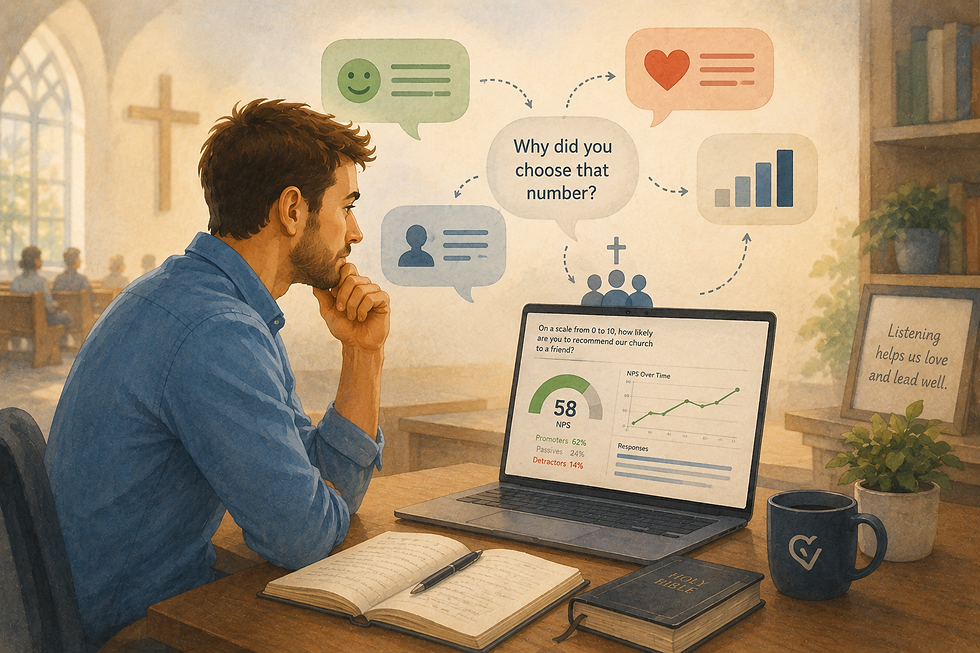
There’s a simple rhythm that changes everything: Listen. Engage. Act.
It starts with listening intentionally and immediately. Right after the event, while the experience is still fresh, you create a simple way for people to share what actually happened from their perspective.
Then you engage. You don’t just collect feedback—you look for patterns, ask better questions, and bring real voices into the conversation.
Finally, you act. You make decisions based on what is true, not what is assumed, and you refine the next experience with clarity.
“The quality of your next event is determined by how well you listen to the last one.”
Why Timing Matters More Than You Think
The most valuable feedback has a short window. Right after an event, details are clear, emotions are present, and people remember exactly what worked and what didn’t.
But give it a few days and that clarity fades. Details blur, small frustrations disappear, and meaningful insights get lost. What remains are only the loudest voices or the most recent comments.
That’s why timing matters. If you wait, you don’t just lose responses—you lose accuracy.
A Real Example
One church hosted a large family event to kick off the year. From a leadership perspective, it felt like a success. Attendance was strong, the energy was high, and the team walked away encouraged.
But instead of relying on that feeling, they sent a short, targeted survey within hours of the event ending. It included just three simple questions: what was most helpful, what was confusing or frustrating, and what would make the experience better next time.
The responses told a more complete story. Families loved the atmosphere and the opportunity to connect, but there was consistent confusion around where to go and what to do when they first arrived. Several parents described the first 10 minutes as unclear and slightly stressful.
When the team gathered for their debrief the next day, the conversation was completely different. They weren’t guessing or debating perceptions—they were responding to a clear pattern.
For the next event, they added clearer signage, positioned volunteers at key entry points, and created a simple welcome guide. The change was straightforward, but the impact was significant.
From Anecdotes to Clarity
Anecdotes will always have a place in leadership. Stories and personal experiences matter, but they shouldn’t be the foundation for decision-making.
A few voices, no matter how well-intentioned, don’t represent the whole. Timely, targeted feedback fills in the gaps and provides something better: clarity.
It allows leaders to see patterns instead of isolated moments and to respond to reality instead of perception.
Where This Changes Everything
When you consistently use a listen-engage-act rhythm, your leadership begins to shift. Debrief meetings become more focused, conversations more productive, and decisions more obvious.
Instead of spending time wondering what happened, teams can move quickly to improving what comes next. Over time, that creates better events, stronger engagement, and clearer communication across the board.
The Next Time You Ask “How Did It Go?”
The next time that question comes up, consider a different approach. Instead of starting with opinions, start with listening.
Engage the feedback before forming conclusions. Act on what you learn with clarity and confidence.
Because when you do, you don’t just run better events—you lead with greater confidence.
And that changes everything.


Comments